Tuesday, January 14, 2014

Free Design Courses on Web

Now that you all are done with your Phase 1 exam, why not have some fun?

What to learn that new skill? Interested in animation? Need tips to learn basic photography? How about some Design Basics?


So, here is a list of few online Design Courses you may be interested in:


For more such courses , visit D 'source website: Click Here

 
We will update and add more such courses soon. Stay tuned!

Friday, December 27, 2013

Hall Tickets Dispatched and Received

As stated in the NID website, December 31, 2013 is the last date of receiving hall tickets of Approved applications.

Here is how the Mail containing your NID Entrance Test Hall Ticket will look like:


If you have received your Hall Ticket, good going!

But if not, here is what you can do:

  • Visit your local post office and ask the concerned Postman about your Letter posted from NID, Gujarat. As this is festive season, there are chances that your Letter from NID may get misplaced/ delayed.
  • If your local post office has not received it, with no delay call the NID Admission Helpdesk and state your query. 
  • NID Admission Helpdesk: Phone: +91 79 2662 3462  |  eMail: admissions@nid.edu

Monday, October 14, 2013

NIDian’s map to help students save big bucks


Ahmedabad - Amdavadis love their Activas, Pulsars, Swifts and Scorpios. Then there are those who swear by the green autos that populate every gali and nukkad of Ahmedabad. But when it comes to saving money, they could do well by taking an AMTS bus. Convinced of this, a student of National Institute of Design in Paldi is helping his fellow students save thousands of rupees by pointing out the right bus route to their most frequented destinations.

Jishnuram CA, a final year student of graphic design, is designing a bus map that will help cut down travel expenses of students from a whopping Rs 2.16 lakh during their fiveyear stay to just Rs 30,000 – a cool save of Rs 1.86 lakh! Jishnuram was working on his year-long classroom project when he found that almost 95 per cent of NID students travel by autos within the city. “Even if three students shared an auto, the expenses were pretty high.

By the end of the project, I decided to design a map that will bring down their expenses. Travelling by bus would cost them Rs 500 compared to the Rs 3,600 they spend on autos every month,” said the 25-year-old. The research was conducted between November 2011 and September 2012.

It took Jishnuram a year to draw the map featuring places from where budding designers could get raw material like paper, fabric, tools, printers etc for their projects. It also highlighted important points like hospitals, premier institutes, railway stations malls, cinema halls and tourist destinations.

“Each route is demarcated using a separate colour. The bus numbers are written in Gujarati as well as English. The map mentions starting and ending point of each route, along with the frequency of buses,” said Jishnuram.

There are legends marking the airport, bus stands, bus stops, cinema halls, educational institutes, hospitals, place of interests, railway stations, materials and services. Tying the legend to the logo (a chabutara), the place of interest is marked by a flying pigeon. The 25-year-old said, “Most students come here from other cities and states. They do not know anything about Ahmedabad.

This map will help our community find places where we can gain material, inspiration and essential help at a glance.” Rupesh Vyas, head of information technology at NID, said, “When the institute director learnt about Jishnuram’s research findings, he began the initiative to provide this essential service to NIDians. It will be launched next week.” The map will initially be distributed to students for free. It might later be sold at NIDUS, the design outlet, for Rs 20.


A student spends Rs 2.16 lakh on auto fare during his 5-year stay at NID. This amount can be reduced to Rs 30,000 if they take a bus. AMTS frequents almost every destination that a design student visits in the city for academic or recreational purposes.


►►► I always waited for my friends so we could share an auto and save money. Also, bus numbers are written in Gujarati so I had to ask other people for help. This map is helpful for students at various levels

- Kiran Ravindran Product design student

 
►►► I know where to source fabrics from, but had no idea about the places I crossed to reach my destination. Taking an autorickshaw was easier but expensive. This map will push us to try public transport

- Swathi Rajgopal Textile design student


Source: Pune Mirror

Monday, July 8, 2013

Preparing for NID Entrance Test - 2014

What should students focus on for the next six months in order to crack the NID Design Aptitude Test 2014? For the next six months, students should consider strengthening their drawing skills and keep abreast with current affairs, both national and international. 

 However, it is not just about learnt skill and talent, but largely about the creative process and design thinking. Students, most importantly, should know how to communicate an idea to the masses. 

It would also help to have a portfolio in place. If the student is consistent with his sketching and is up-to-date with his or her work s/he will have a range of work to showcase during the interview. Having worked with a variety of media is always beneficial for a strong portfolio. Work can range from doodles to finished pieces of work; there is no set criterion with regards to what should go in your portfolio. Play on your strengths.

What is the importance of joining a coaching class?

Coaching classes are not a must-do for students wanting to successfully attempt the NID entrance. While they do offer some insight — common queries of what to expect from the paper and solve sample papers — student shouldn't rely on it entirely. However, do remember that the question paper pattern is not set in stone and they must be flexible enough to deal with the diversity of questions.

What is the pattern of the question paper?

 In the 2013 exam, 25% of the questions focused on general knowledge; 25% logistic reasoning; another 25% allotted to drawing skills related to human anatomy and postures. The last 25% were based on creative thinking and applications . This was a rough breakdown in our paper, but it varies each year, we are told. There is no negative marking.

How can students manage a good score?

 The question paper, even though it grades, is qualitative in nature. It is important to answer sensibly and be confident about what you are drawing and answering. One should not worry about marks or scoring high; the focus should be on communicating your ideas creatively in the paper.

What kind of preparation is required post the written exam?

 Post the written exam, if selected, you'll have a studio test and portfolio interview at the campus. Studio test checks not only your creativity but also tests your hands-on skills and spontaneity. Observation and memory retention are other traits you'll be tested for. In the portfolio interview, you will be required to talk about your work over the past few years and answer questions put forth by the panelist.

> IMPORTANT DATES

APPLICATION DATE

The admissions announcement is published in leading national dailies around end of September, beginning of October

EXAM DATE:

The written test is conducted during January and short-listed candidates are invited for studio tests & interviews around April


Courtesy: Educationtimes.com

Friday, June 21, 2013

Fewer foreign students at NID this year

The National Institute of Design’s (NID) move to attract foreign students at the campus suffered a major setback as India’s premier design institute managed to get only 15 NRI students.

Last year, when the idea to have 10 percent seats allotted for students of foreign origin and NRIs was proposed, the management gave it a green signal as the institute was confident of attracting students from across the globe.

However, the real story showed a completely different picture as the 15 students selected from the 26 applications are from countries such as Thailand, Oman, Saudi Arabia, Canada, Dubai and Qatar. The institute was expecting major participation from students from countries such as the UK, US, Australia and Germany which has a major chunk of NRIs.

Despite this, NID registrar Vijaya Deshmukh is still upbeat about the decision and said the poor response is because the institute did not adequately advertise overseas.

“The news of admission to foreign students has spread through word of mouth. As we plan for the next academic year, we intend to advertise with help from the Indian Embassy and through advertisement in newspapers overseas,” she said.

NID had decided to give admission to 10 percent foreign students from the
academic year 2013-14. As per the system, if the institute gives admission to 100 students, 10 additional students from the new criterion will be admitted.

Source: DNA News

Thursday, June 13, 2013

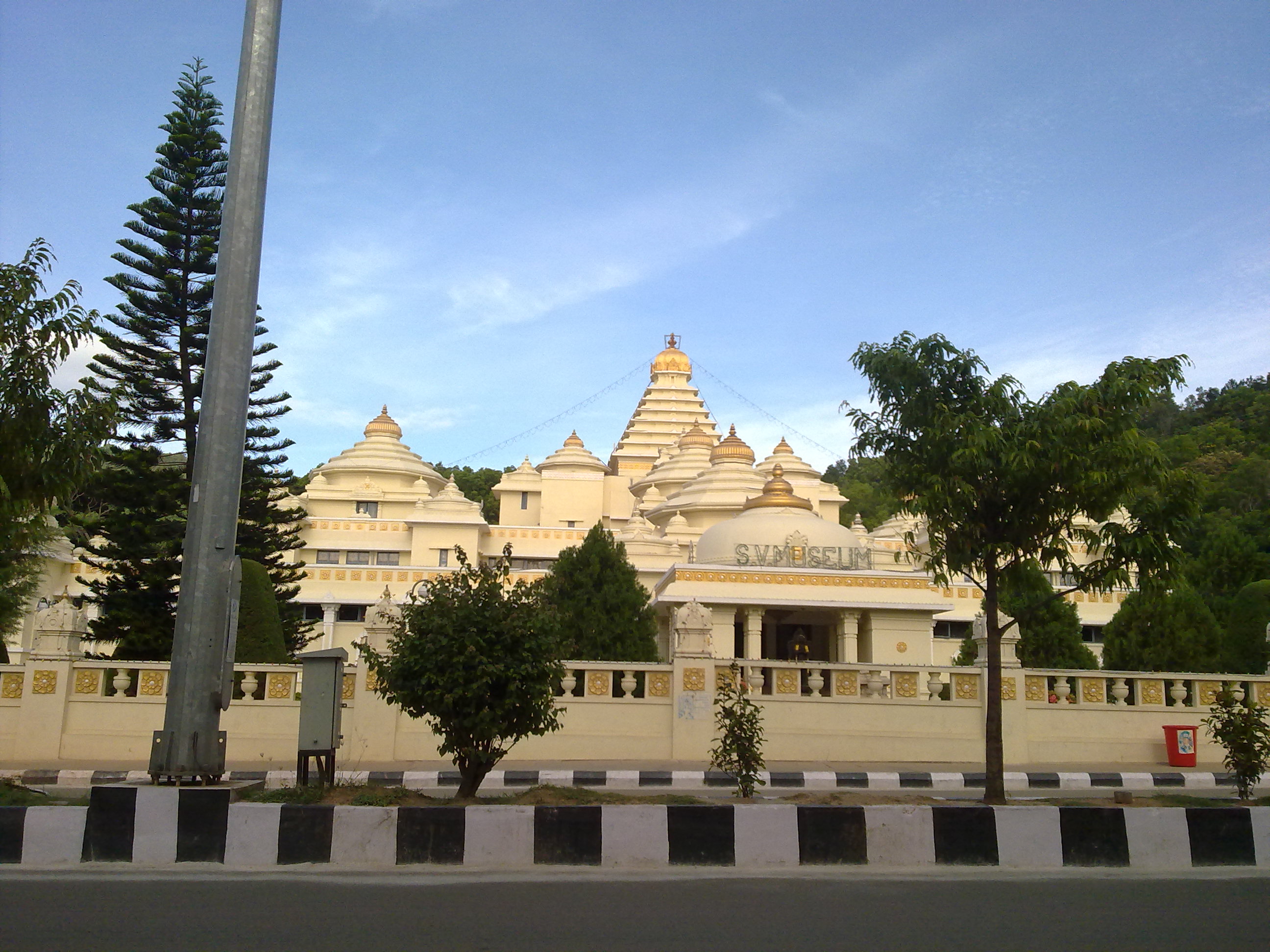
NID to redesign Tirupati museum

With the National Institute of Design (NID) bagging the project to redesign the three-decade-old Sri Venkateshwara Museum at Tirupati, devotees to the Andhra Pradesh shrine will be able to see the history of one of the richest and most protected shrines in the world.

The institute, given the project by the Tirupati Tirumala Devasthanam Museum Project Committee, will revamp the temple museum located adjacent to the temple complex in two-year time.


The temple museum body took almost one year to finalise the project with NID, which has formed a core team, led by NID faculty Anil Sinha with colleagues Mihir Bhole, Krishnesh Mehta and Bhadresh Shukla to overlook the project as part of the institute's consultancy services.

"Currently, the museum has no thematic sequence or story. Our idea is to engage with the lakhs of devotees who wait for several hours before they get to enter the temple premises for darshan or prayers. We plan to divide the museum into three areas — pilgrimage, homage and passage. We will try to weave the story of Lord Venkateshwara and the temple around it," said Sinha.

While NID's core team have come up with a concept for the museum, they will research the artifacts within the museum in the next six months.

Monday, June 3, 2013

Destiny's design: Rag-picker makes it to NID

Sanjay Parmar spent much of his childhood picking rags, sifting through mounds of waste at Rama Pir No Tekro in Vadaj area of Ahmedabad to supplement the family's meagre income. Sanjay's father Dineshbhai was a driver and barely managed to put food on the table for his three children. On lucky days, he would find a pair of footwear for his little sister Manisha in the garbage. When bored, Sanjay would fashion boats out of waste paper and cars from discarded thermocol packaging.

Then destiny intervened. At 19, Sanjay is perhaps the only one with a rag-picking past to make it to the country's premiere design school 'National Institute of Design' - and aims to become an automobile designer.

But first, he wants to design is an aid which cuts the burden of LPG cylinder deliverymen. "I have seen my father break his back delivering cylinders in multi-storey houses which don't have lifts. It is my dream to design a simple aid," he says.

The young boy's life turned when he was selected as one of eight kids who were enrolled in a special project by NGO Visamo Kids which gave bright children from poor families a chance at a good education. "If I was not plucked out of the slums and given an education, I would not have gone beyond class X. All my best friends are school dropouts", says Sanjay.

Initially, it was tough for Sanjay to adjust to the new world. "He was an angry, stubborn child. He was not good at learning and writing but he was good with his hands," says Amee Shah, boarding in-charge of Visamo Kids. Sanjay calls Amee his second mother. While the residential programme covers education till class XII, an anonymous donor came forward to fund his education when he made it to NID. He was also trained by city-based designer Bhanvar Rathore for the entrance test.

"I did not have the means to educate Sanjay; I could just provide him a roof. When he becomes a man, he will buy us a house," says Dineshbhai.


Source: TOI

Saturday, June 1, 2013

Dream never dies: CM ensures it for tribal boy

For 25-year-old Karmu Majhi, the distance from Rayagada to Ahmedabad was unimaginably long. On Wednesday, when he set out for the prestigious National Institute of Design (NID) at Ahmedabad, he would have felt it as the beginning of the journey of his lifetime.

For someone, who hailed from the forested and hilly Uparjhiri village of tribal-dominated Rayagada district’s Kashipur block replete with stories of hunger and cholera outbreaks, pursuing a Degree course in Graphic Designs at the NID was a fairytale that came true.

Thanks to the generous support from Odisha Government, Karmu boarded the train to the Gujarat capital on Wednesday to take admission in the two and a half-year course. Till last Monday though, he would have doubted he could make it. He approached Chief Minister’s Grievance Cell seeking financial support for pursuing the course for which he had toiled day and night.

It had all started with his childhood passion for drawing and painting. He drew his way to top and bagged numerous prizes in his district but his financial background was feeble. He slogged hard and with support from his father, a BPL card holder farmer who had to raise five other children, Karmu had got admitted to BK College of Art, a government college where he studied Visual Art and supported himself by making wooden partitions as a part-time job. 

But dreaming of an NID degree that cost more than Rs two lakh towards course fee was a crime but dream he did.

He appeared for the entrance test and cleared it. He went on to qualify the studio test and personal interview. There were just 15 seats up for grabs and Karmu had one to his name. But it was that Rs two lakh that mattered.

When he approached the CM’s Grievance Cell last Monday, Chief Minister Naveen Patnaik directed SC and ST Development Department to contact NID and assure State Government’s willingness to pay Karmu’s course fee which will be transferred electronically.

With NID beckoning, Karmu left for Ahmedabad by train on but not before meeting Naveen at his residence to express his gratitude.

Sunday, May 26, 2013

Anand Sharma lays foundation for National Institute of Design, Hyderabad

Commerce and industry minister Anand Sharma Saturday laid the foundation stone of the National Institute of Design (NID) here.

The NID, which is coming up on 30 acres of land on the campus of University of Hyderabad at a cost of Rs 155 crore, is expected to offer undergraduate and postgraduate courses from 2015-16 for 500 students.


This will be the fourth NID campus in the country. The institute was established in Ahmedabad in 1961 and has its campuses in Gandhinagar and Bangalore, offering graduate and postgraduate diploma courses in 18 disciplines.

NID Hyderabad is one among the four NIDs being set up under the national design policy of 2007.

The minister on Wednesday laid the foundation stone for the second NID in Haryana's Kurukshetra district.

Sharma said two more NIDs were planned in Jorhat ( Assam) and Bhopal to cater to the students of the respective regions.

The institute will help student community towards shaping their career in most creative sectors and is also expected to benefit the industry to improve their quality of products.

The NID is useful to a broad spectrum from industrially mass produced good to handicrafts, handlooms and skill oriented artisan communities like potters, painters, weavers, carpenters, leather, brass, silver craftsmen.

The minister said the government aimed to make India a major design hub for exports by producing 15,000 top engineers in five years

"Finland has 145 designers per million population, Japan 90 per million whereas India has a dismal two designers per million population. This needs to change in the next five years and we should aim to create a pool of 15,000 top designers. India should eventually become an outsourcing hub for designers," Sharma said.

He called for weaving in a philosophy of design into education and building linkages with education system.

Sharma pointed out that national design policy was announced with the aim of building on traditional knowledge skills and capabilities and to ensure that "our shop floor workers, craftsmen and artisans become equal partners in manufacture of innovative products and contemporisation of traditional crafts".

The minister said World Pharma Trade Centre would soon be set up at Hyderabad keeping in view the large presence of pharmaceutical companies and research institutions in and around the city.

He said Indian Institute of Foreign Trade would also come up soon at Visakhapatnam with the aim of creating a pool of trained manpower to deal with foreign trade.

Foundation stone will also be laid for a new footwear design and development institute at Hyderabad in the next month.

Human Resource Development Minister M.M. Pallam Raju and Andhra Pradesh chief minister N Kiran Kumar Reddy were among those who attended the ceremony. 


Source: TOI

Thursday, May 23, 2013

Target NID to launch Short - Term Design Courses

Design education in India is having a steady growth with good number of National and Private institutions coming up. Many institutes are providing modern and industry based courses to make students ready for jobs right after their graduation.

Target NID has decided to introduce short - term design courses to help enthusiasts learn basics to advanced design knowledge right from their homes.

Our courses will be internet based and is being developed by design mentors and current design students. The entire course can be downloaded and shared with certain restrictions.

To receive the course modules, one has to register with Target NID. After successful registration, you will receive the course modules periodically by email.

List of courses being currently developed:

*  Foundation in Design
*  Fashion Design
*  Graphic Design
3D Animation
*  Product Design
*  Architectural Design

Those interested to help us in development of the above courses, can leave us an email. This is an open project meant to promote design education in India. Conceptualized by Target NID.

Japan to help set up India's 2nd NID in Haryana

India's second National Institute of Design (NID) will be set up in Haryana's Kurukshetra district with provide technological assistance from Japan.

The Commerce and Industry Minister Anand Sharma on 22 May, 2013, laid the foundation stone of the NID to be
set up in Urmi village of Kurukshetra district, Haryana. The first NID was set up in Ahmedabad in 1961.

Sharma said that he had been to Japan recently where he urged Japan to collaborate in the setting up of the NID in Kurukshetra.

"It is a matter of happiness that Japan would provide technological assistance to this institute," he said while addressing the gathering at the foundation stone laying function. He said that in view of its national importance, the NID has been declared as a centre of excellence.

Spread in over 20 acres, the new NID will have an investment of over Rs.160 crore. It will offer under-graduate and post-graduate courses to over 500 students.

"This institute would provide world class design education and training to the professionals in the field of animation, films, exhibitions, graphics, products, Ceramic and Glass, lifestyle and furniture and interior design. The concerned departments of the ministry have been directed to complete all the relevant formalities so as to set up this institute in a record time," Sharma said.


Source: India EDU News

Monday, May 6, 2013

NID Phase 2 Results Announced

NID Phase 2 Results for Entrance 2013- 2014 is announced. Click on the link below to check your admission status. Target NID congratulates all the selected students.


Saturday, April 20, 2013

World's first smartphone for the blind made in India


The world's first smartphone for blind people is here. Soon, they will be able to read SMSes and emails on this phone, which converts all text into Braille patterns.
"We have created the world's first Braille smartphone," says its innovator, Sumit Dagar, whose company is being incubated at the Centre for Innovation Incubation and Entrepreneurship, located in IIM Ahmedabad campus. "This product is based on an innovative 'touch screen' which is capable of elevating and depressing the contents it receives to transform them into 'touchable' patterns," he says.
Dagar, who is a post-graduate from the National Institute of Design (NID), says he was motivated to develop the device when he realised that so far, technology was only serving the mainstream and ignoring the marginalised. He is collaborating with IIT Delhi on making the prototype, which is currently being tested at L V Prasad Eye Institute in Hyderabad.
"The response during the test has been immense. It comes out as a companion more than a phone to the user. We plan to do more advanced versions of the phone in the future," Dagar adds.
Dagar started the project three years ago while studying interaction designing at NID. After working with a couple of companies, he gave up his job to concentrate on his technology, formed a team of six people and started his venture, Kriyate Design Solutions. Currently, the venture is being funded by Rolex Awards under its Young Laureates Programme, in which they select five people from across the world every two years and fund their projects.


How it works
  • The smartphone uses Shape Memory Alloy technology, based on the concept that metals remember their original shapes, i.e. expand and contract to its original shape after use.
  • The phone's 'screen' has a grid of pins, which move up and down as per requirement. The grid has a Braille display, where pins come up to represent a character or letter.
  • This screen will be capable of elevating and depressing the contents to form patterns in Braille.
  • All other elements are like any other smartphone.
Source: TOI News


Thursday, April 11, 2013

Choosing Applied Arts as a Career

Applied art is the application of design and aesthetics to objects of function and everyday use. Whereas fine arts serve as intellectual stimulation to the viewer or academic sensibilities as well as produced or intended primarily for beauty; the applied arts incorporate design and creative ideals to objects of utility, such as a cup, magazine or decorative park bench. There is considerable overlap between the field and that of the decorative arts; to some extent they are alternative terms. 


The fields of industrial design, graphic design, fashion design, interior design, decorative art and functional art are altogether considered applied arts. In a creative and/or abstract context, the fields of architecture and photography are considered applied arts. Many applied art objects are collected, for instance ceramics, textiles, jewelry, glass, furniture, children's toys, cars, electric guitars, as well as various forms of images produced in commercial contexts, such as film posters or old advertisements.


Target NID PICK - Undergraduate Applied Arts Colleges in India 

We have shortlisted colleges based on independent surveys and student friendliness index. 

  • MS University Of Baroda - Faculty of Fine Arts, Vadodara 
  • Sir J. J. Institute of Applied Art, Mumbai 
  • College of Art - University of Delhi, Delhi 
  • Bharati Vidyapeeth's Bharati Kala Mahavidyalaya, Pune 
  • Faculty of Fine Arts - Rabindra Bharati University, Kolkata
  • Rachana Sansad College of Applied Art & Craft, Mumbai 
  • Padmashree Dr. D. Y. Patil College of Applied Arts & Crafts, Pune 
  • Goa College of Art, Goa 
  • Government College of Art, Chandigarh 
  • Jawaharlal Nehru Architecture and Fine Arts University, Hyderabad

Need Help about admission process? Shout your queries at Query Zone now.

Wednesday, April 10, 2013

Fall in Line - Be A Commercial Artist

Applied Art or Commercial Art is used to convey a message. It could mean informing readers about the miracles of an anti-ageing cream creatively with a beautiful illustration featured in an advertisement. 


Designers might also have to simplify and explain a complex process — say how the human body reacts to a certain medicine, making a user-friendly map for easy navigation. They might have to create logos highlighting the vision and mission of an organisation, or an amusing animation film or posters around a theme. Artists have to make illustrations or graphics manually or use specific design software such as Coreldraw or Adobe. It’s all about creating interesting visuals to give life to a story or an advertisement. He/she is responsible for creating design solutions that have a high visual impact. Designs are required for websites, advertising, books, magazines, newspapers, posters, computer games, product packaging, exhibitions and displays, and all types pf communications etc.

A Day Being a Graphic Designer


6.30 AM: Get up and go for a walk in the park where I get ideas related to my work by observing the birds, animals and people around me

7.30 AM: Return home, get ready and have breakfast

9.00 AM: Leave for office

9.30 AM: Make a to-do list

2.00 PM: Choose to have a working lunch during which I browse the net to keep myself updated, reply to emails

5.30 PM: Finish work

6.30 PM: Head back home and go for yoga classes

8.30 PM: Freshen up, play music, have dinner, sit with a book or watch TV 


The Payoff

Money is not a constraint for deserving candidates. Once you have proven your mettle, you can expect good money in the market. Money at the start, however, is not very good. You can get anything between Rs. 10,000 per month to Rs. 2.5 crore for creating a logo. A good designer designs his or her own growth by evolving with changing times and trends. The sky is the limit commercially for the deserving 


Skills / TRAITS

* Oodles of creativity and imagination

* Has to be tech savvy

* Should be able to feel the pulse of society and should have a fair idea of what will work

* Research-oriented, unbiased and devoted to work


Getting There

After Class 12, you should go for a bachelor of fine arts programme in applied art, painting, animation or visual communication or even sculpture, depending on your interests and abilities. These programmes will be available at any college of art in your city. The well-known National Institute of Design, Ahmedabad, also trains commercial artists. The entry process usually involves an aptitude test. Many private institutes and academies, too, run relevant courses 


Applied Arts Institutes (Click University Name to visit their official website)


* Sir JJ School of Art and Sir JJ School of Applied Art, Mumbai

* Banaras Hindu University, Varanasi

* National Institute of Design, Ahmedabad

Pros and Cons

* Plenty of career avenues

* You may have to work 24/7

* If self-employed or freelancing, may have to run after payments
People with a genuine interest in art should enter this field. Quality work and good business strategy can take you places. 

Deelip Khomane, veteran graphic designer and creative consultant at Ogilvy in Mumbai.

Source: HTeducation

Thursday, April 4, 2013

Best Applied and Fine Arts Colleges - India Today Survey

For centuries, royal patronage made art a way of life for the inhabitants of Vadodara. Besides commissioning royal portraits from painters such as Raja Ravi Varma, the ruling Gaekwads set up a museum to display their stunning collection of rare works sourced from around the globe. But it was only later-in 1949 with the setting up of the Faculty of Fine Arts (FFA) as part of Baroda University-that it became the nursery of Indian art.

For the complete list of India Today's Best Fine Arts colleges Click Here 

Over the next few decades, FFA earned a reputation of being a liberal, progressive institute that encouraged artistic experimentation. It provided students space in which to dream and create and encouraged a healthy exchange of ideas as well as a spirit of inquiry. The faculty was supportive of experimental efforts, working with new and unusual mediums, and exploring a new visual language. Art students from across the country vied for admission, for a chance to learn from teachers such as Laxma Goud, Nasreen Mohamedi and Sankho Chaudhuri. As other art schools in the country struggled to make a name for themselves, FFA was far ahead of its contemporaries.


Gulam Mohammed Sheikh, 75, artist and former professor who taught art history and painting at the institution for years, says, "FFA was the first fine arts college in the country to start full-fledged degree courses. The institution had a unique cosmopolitan nature. 


It belonged to everybody and yet to nobody; its gates were never closed."

Rekha Rodwittiya, 53, an alumnus of the college between 1976 and 1981, says, "FFA in the late 1970s and early 1980s was a space of intense learning that inculcated, quite rigorously, a theoretical and art historical framework of teaching visual arts. A political consciousness was also prevalent that enabled individuals to contextualise personal positions of affiliation by which to define self-representation."

But somewhere around the late 1990s the institute went into a slump. For the next 15 years FFA found itself beset by controversy, attacked by religious fundamentalists and overrun by petty politics. "FFA's standards have been on the decline for over a decade. Today, its reputation only exists because of its golden past. Because all the other visual arts colleges in India are equally pathetic, Baroda continues to hold the distinction of being considered the best," says Rodwittiya.

Despite this, FFA is beloved to many. Over 1,600 artists practise and reside in the city, while close to 130 students take admission each year in a graduate or postgraduate programme and enter the hallowed portals of the Faculty of Arts-designed in Indo-Saracenic architecture style by Robert Fellowes Chisholm in the 19th century.

Sculpture is one of three major studio disciplines apart from painting and applied arts taught here. But the department of painting rules supreme. In the six decades of its existence, FFA alumni have gone on to participate in exhibitions worldwide, such as the Paris Biennale, the Sao Paulo Biennale, and the Tokyo Biennale. Many of India's best known and respected artists can thank FFA for teaching them the basics, reason enough why it has been ranked the finest fine arts college in India in the 2012 India Today Nielsen annual colleges survey.

Art patrons from across the world descend on the university campus in search of a new star every year at the annual students' exhibition. "Vadodara is a laidback city and just an overnight train journey from Mumbai and Delhi, the two commercial centres of the Indian art market," says Shailendra K. Kushwaha, 60, dean in-charge, FFA, since 2009. Struggling art students can take hope in the knowledge that at FFA, their dreams of attaining glory someday are within reach.


Source: India Today

Monday, March 4, 2013

NID 2013 Results to be Announced

As stated in the brochure and website, the NID Results for Entrance 2013- 2014 were to be posted by today ie, March 04, 2012.

While exploring the website, Target NID found the following link which declares to be the Online Result Announcement. Though presently it shows no results, be hooked to this page for more updates.

Update 01:NID Results weblink is being updated. Click the following 'RESULTS Tab' in a couple of hours.  

Update 02:NID Results will be announced on March 6, 2013 by 06: 00 PM.

Update 03:Due to Technical Issues, NID Results will be declared on March 07, 2013 by 06:00 PM. We recommend you to check your result from our website as it will have less load than that of NID's Server. All the Best.

Update 04: NID is facing certain Technical Issues, and results will be announced shortly (till further notice). We suggest you to Subscribe Our Blog so that we can inform you in case of any updates related to Results 2013. 

Update 05: NID PGDPD Results announced. Click Below for PGDPD Results 2013. GDPD Results will be announced shortly. 

Update 06: NID GDPD Results announced.